

Call Our Experts!
Call Our Experts!

Summary
Radiant barriers reflect up to 97 percent of radiant heat away from your siding and walls, reducing cooling costs and improving indoor comfort in New Orleans, LA. When paired with durable siding materials like fiber cement or vinyl, radiant barriers help homes stay cooler during long Gulf Coast summers. Big Easy Sidings installs radiant barriers alongside new siding to deliver long-term energy savings for Louisiana homeowners.
Radiant barriers make a real difference for New Orleans homes, where intense Gulf Coast sun heats exterior walls for eight or more months each year. By reflecting radiant heat before it passes through your siding, these barriers reduce the workload on your air conditioning and help keep indoor temperatures stable. For older homes, shotgun doubles, and raised-foundation houses across the metro area, that translates to lower utility bills and a more comfortable living space. At Big Easy Sidings, we install radiant barriers as part of siding projects throughout New Orleans, LA and surrounding parishes.
With summer temperatures regularly climbing past 95 degrees and humidity hovering above 70 percent, the combination of radiant barriers and quality siding is one of the most effective ways to protect your home and cut energy costs in South Louisiana.
Radiant heat travels as electromagnetic waves, primarily from sunlight, and directly heats any surface it strikes. In New Orleans, where direct sun exposure is intense from April through October, radiant heat is one of the biggest factors driving up cooling costs.
When sunlight hits your siding, much of that energy transfers through the wall assembly and into your attic and living spaces. Traditional insulation like fiberglass or foam slows conductive heat transfer, but it does little to stop radiant heat. That is where radiant barriers come in. A properly installed radiant barrier reflects up to 97 percent of incoming radiant heat, preventing it from reaching your insulation and interior walls.
For New Orleans homes, this matters because attic temperatures can exceed 140 degrees on a summer afternoon. Without a radiant barrier, that heat radiates downward into your living space, forcing your HVAC system to run longer and harder. With a barrier in place, less heat enters the building envelope, and your home stays noticeably cooler.
Radiant barriers work with your siding to create a more complete thermal envelope. Here is how each benefit plays out in New Orleans conditions.
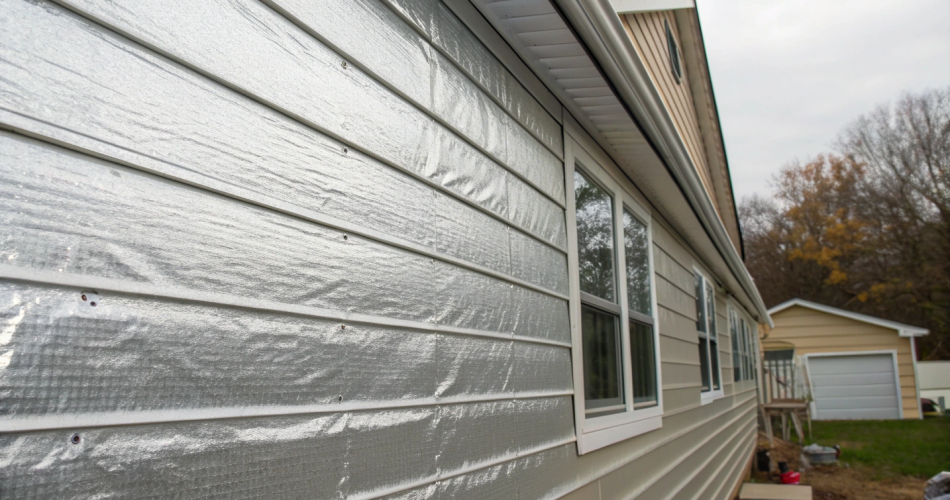
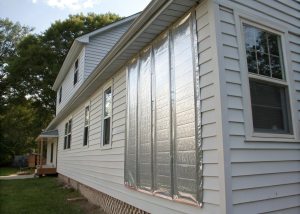 Radiant barriers made from aluminum foil reflect up to 97 percent of radiant heat, keeping your siding and wall assembly significantly cooler during New Orleans summers. The key to performance is maintaining an air gap of about one inch between the barrier and the siding. This air space allows the barrier to reflect heat rather than conduct it, which maximizes its effectiveness without adding significant cost.
In a city where direct sunlight bakes south-facing and west-facing walls all afternoon, that reflective layer can mean the difference between a comfortable home and one that feels warm even with the AC running.
When paired with standard insulation like fiberglass or spray foam, radiant barriers address both radiant and conductive heat transfer, creating a more complete thermal barrier. Traditional insulation slows heat that moves through direct contact between materials. The radiant barrier handles the heat that travels as infrared energy. Together, they cover the two main ways heat enters a wall system.
For New Orleans homes with older wall assemblies, especially those built before modern insulation standards, this combination can make a noticeable improvement in how well the home holds conditioned air.
By blocking radiant heat before it reaches your interior walls, radiant barriers can reduce cooling costs by 5 to 10 percent and stabilize indoor temperatures throughout the day. In a city where AC runs six to eight months of the year, that percentage adds up quickly. Homeowners on tree-lined streets in Uptown or Garden District may see slightly different results than those in Lakeview or New Orleans East, where homes get more direct sun exposure, but the savings are consistent across the metro.
Radiant barriers eliminate hot spots and create more consistent temperatures from room to room, even during the hottest stretches of a New Orleans summer. They also reduce humidity levels inside the wall cavity, which improves indoor air quality. For homes without zoned HVAC, this is especially valuable because it reduces the temperature difference between upstairs and downstairs spaces.
Combined with conventional insulation, radiant barriers increase the effective R-value of your wall assembly and strengthen your home’s overall thermal envelope. This makes your siding system more efficient and extends the life of both the siding and the insulation by reducing thermal cycling and moisture stress. Pairing James Hardie fiber cement siding with a radiant barrier is one of the strongest combinations for New Orleans climate conditions.
Heat, humidity, and hurricanes make siding selection and installation more complex in New Orleans than in most other markets. The right material and barrier pairing can mean the difference between siding that performs well for decades and siding that degrades within a few years.
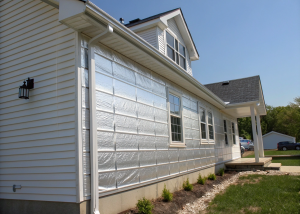 New Orleans averages over 200 days per year with temperatures above 80 degrees, and relative humidity regularly exceeds 75 percent, which puts constant thermal and moisture stress on any siding system. Intense sun heats exterior surfaces, while humidity can compromise traditional insulation if moisture gets trapped in the wall cavity. Radiant barriers reflect that heat before it enters the wall, and when installed with proper ventilation, they help keep insulation dry and functional.
During hurricane season, wind-driven rain adds another layer of concern. A well-installed barrier and siding system includes proper sealing and drainage planes to keep water out while still allowing the wall to breathe.
To get the best results from a radiant barrier, the siding material matters. The most effective pairings for Louisiana conditions include:
| Siding Material | Why It Works with Radiant Barriers in NOLA |
|---|---|
| Fiber Cement (James Hardie) | Moisture-resistant, fire-rated, and holds up to intense UV exposure without warping |
| Vinyl | Lightweight, naturally reflective, and budget-friendly for whole-house coverage |
| Engineered Wood | Strong, weather-resistant, and fits the aesthetic of historic NOLA neighborhoods |
Maintaining a half-inch to one-inch airspace between the siding and the radiant barrier is essential. That gap is what allows the barrier to reflect rather than conduct heat.
Proper spacing, sealing, and airflow are critical to radiant barrier performance, especially in New Orleans where moisture management is just as important as heat control. Balanced ventilation, with a roughly 50/50 ratio of intake to exhaust, prevents heat and moisture from building up behind the siding. Without adequate airflow, trapped moisture can lead to mold, rot, and insulation failure.
This is particularly important for raised-foundation homes and shotgun-style houses, where wall cavities can be narrower and airflow patterns differ from modern construction.
Ventilation and radiant barriers are not separate upgrades. They work as a system. Without proper ventilation, a radiant barrier can trap moisture in the wall or attic assembly, which defeats the purpose in a climate as humid as New Orleans.
Balanced airflow between intake vents (soffit or eave) and exhaust vents (ridge or gable) allows hot air to escape while drawing cooler air in. In attic spaces, where temperatures can exceed 140 degrees, this airflow carries away the heat that the radiant barrier reflects downward. The result is a cooler attic, less heat transfer into living spaces, and a longer lifespan for your roofing and siding materials.
For homes along the lakefront or in low-lying areas of Jefferson Parish, where humidity levels are consistently higher, ventilation design should account for the added moisture load. Getting this balance right during installation prevents long-term structural issues and keeps your energy savings on track year after year.
If you notice any of the following, it may be time to combine a siding upgrade with a radiant barrier installation:
A siding contractor familiar with New Orleans building conditions can evaluate your wall assembly, insulation, and ventilation to determine whether a radiant barrier will deliver meaningful savings for your home. Call Big Easy Sidings at 504-608-7163 to schedule an evaluation.
Radiant barriers paired with quality siding are one of the smartest investments a New Orleans homeowner can make. They reduce cooling costs, improve comfort, and extend the life of your siding by reducing the thermal stress that breaks down materials over time.
Big Easy Sidings installs radiant barriers alongside new siding throughout New Orleans, LA and the surrounding metro area. We serve New Orleans, Baton Rouge, Covington, Gretna, Hammond, Kenner, Metairie, Slidell, and throughout Louisiana.
Request your free estimate today and find out how radiant barriers can lower your energy bills and keep your home comfortable year-round.
Yes. In hot, sunny climates like New Orleans, radiant barriers can reduce cooling costs by 5 to 10 percent by reflecting heat before it enters your wall and attic spaces.
Fiber cement, vinyl, and engineered wood all pair well with radiant barriers. Fiber cement is the top choice for New Orleans because it resists moisture, UV damage, and high winds.
Only if ventilation is inadequate. A properly installed radiant barrier includes balanced intake and exhaust ventilation to prevent moisture buildup, which is critical in Louisiana’s humid climate.
Older homes, including shotgun houses and raised-foundation builds, often benefit the most because they typically lack modern insulation. Adding a radiant barrier during a siding upgrade addresses both heat and moisture issues at once.
Radiant barriers have no moving parts and do not degrade under normal conditions. When installed correctly behind siding, they can last 20 years or more with no maintenance.
 Big Easy Sidings