

Call Our Experts!
Call Our Experts!

DIY siding installation can save on labor costs for small, simple projects like a single wall or shed, but full-home siding in New Orleans involves moisture barriers, flashing details, and hurricane-code fastening that most homeowners are not equipped to handle correctly. Mistakes in these areas often cost more to fix than a crew-installed job would have cost in the first place.
Not every siding job requires a hired crew. Small, low-stakes projects, a detached shed, a garden wall, or a single small accent section, are reasonable DIY candidates for a homeowner comfortable with basic carpentry tools. These projects typically do not involve the moisture-critical details that make whole-house siding a different category of work entirely.
Scale is the real dividing line, not skill alone. A single small structure with a simple roofline gives a DIYer room to learn and correct mistakes without much consequence if something goes slightly wrong. A full two-story home with multiple windows, corners, and roof intersections multiplies the number of places where flashing and moisture barriers need to be done correctly, and a single missed detail on a home that size can lead to water finding its way in somewhere unexpected.
Vinyl siding is the most forgiving material for a confident DIYer since it snaps together with a hanging system rather than requiring precise nailing patterns. Fiber cement and engineered wood, by contrast, require specific fastener spacing, blade types for cutting, and moisture barrier details that are much easier to get wrong. Big Easy Sidings can tell you that when DIY fiber cement goes wrong, the board is rarely the problem. The installation is, and those mistakes can take months to show up.
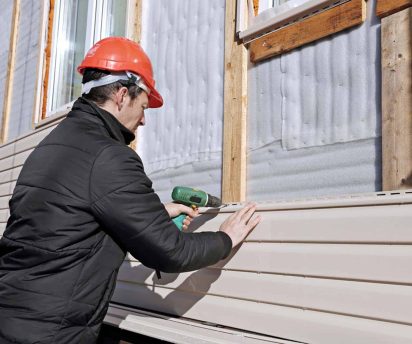
The most common DIY mistake is skipping or improperly installing the weather-resistant barrier underneath the siding. This layer is what actually keeps water out of the wall assembly, the siding itself is a secondary defense, not the primary one. Homeowners who focus entirely on getting the visible panels straight often shortcut the barrier installation, which sets up moisture problems that can take years to surface.

Flashing around windows and doors is another frequent failure point. Improperly installed flashing directs water into the wall instead of away from it, and this kind of leak often goes unnoticed until interior drywall or trim starts showing damage. Our guide on siding repair versus replacement explains how a flashing error can look like a much bigger problem than it really is.
New Orleans and the surrounding parishes fall under building codes shaped by hurricane risk, which means fastener spacing, siding overlap, and wind-load ratings are not optional details, they are code requirements enforced through permitting and inspection. A DIY installation that skips permitting can end up out of compliance without the homeowner realizing it until a home sale inspection or an insurance claim surfaces the issue.
Manufacturer warranties also frequently require installation by a certified or licensed contractor to remain valid, particularly for fiber cement products like James Hardie. Our piece on whether James Hardie siding is worth the investment touches on how installation quality directly affects both performance and warranty coverage over the life of the product.
Hiring out comes with its own local rule. The Louisiana State Licensing Board for Contractors requires a home improvement license for projects of $7,500 or more on an existing home, so look up any company you’re considering on the board’s license search before you sign. If your house sits in a New Orleans historic district, exterior work may also need approval first: the Vieux Carre Commission handles the French Quarter, and the Historic District Landmarks Commission reviews work in the city’s other districts. Any required review applies whether you do the work yourself or hire it out.
DIY siding looks cheaper on paper because it eliminates labor costs, but that comparison only holds up if the installation goes correctly the first time. A poorly installed moisture barrier or flashing detail often is not visible until years later, and by then the fix usually means a siding repair job that removes boards to replace rotted sheathing underneath, a repair bill that frequently exceeds what paying an installer would have cost from the start.

Time is the other overlooked cost. An experienced crew installs an average home’s siding in days using specialized tools and established sequencing. A DIY project, especially one done evenings and weekends around a regular work schedule, can stretch across months, during which the house sits partially exposed to weather and the unfinished sections are more vulnerable to storm damage.
There is also an opportunity cost to consider that rarely makes it into the DIY-versus-hiring-out conversation. Weekends spent on a slow-moving siding project are weekends not spent on other home maintenance, and the mental overhead of managing an unfinished exterior project for months can wear on a household. Some homeowners find that even setting aside the dollar figures, the time and stress savings alone justify hiring a crew that can complete the job in a predictable window.
Insurance is worth a mention too. A partially completed DIY siding project during hurricane season can leave a home more exposed to wind and water damage than either the old siding or a fully completed new installation would. If a storm hits mid-project, homeowners should check with their insurer about how coverage applies to a house in an unfinished state, since this is not always addressed clearly in a standard policy.
Before committing to a DIY approach, be honest about a few things: do you have experience cutting and fastening the specific material you are installing, do you understand local code requirements for fastener spacing and wind rating, and are you prepared to pull the necessary permits and pass inspection. If any answer is uncertain, that uncertainty is itself useful information about which direction to take.
For homeowners leaning toward hiring out the work, our guide to choosing a siding contractor covers what licensing, insurance, and references to verify before signing a contract. And if budget is the main reason DIY feels appealing, ask any company you interview about financing options before ruling out a hired install entirely, many homeowners are surprised by how manageable monthly payments can be compared to the upfront cost. Our siding installation services page has more on what a full installation project includes from start to finish.
Some homeowners choose a hybrid approach: handling demolition and material staging themselves to reduce labor costs, then bringing in a crew specifically for the installation and flashing work where mistakes are costly. Discuss this option directly with any company you are considering, since not every company offers it, but it can meaningfully reduce the total project cost while still protecting the moisture-critical parts of the job.
Whichever route you take, timing still matters. Our guide on the best time of year to replace siding applies just as much to a DIY schedule as a crew’s schedule, since starting a project too close to hurricane season adds risk regardless of who is doing the work.
Small vinyl siding projects are reasonable for a confident DIYer since the panels use a hanging system rather than precise nailing. Whole-house installation still involves moisture barrier and flashing details that are easy to get wrong without experience.
Improperly installed or skipped weather-resistant barriers and flashing are the most common and most costly mistakes, since they allow water into the wall assembly where damage can go unnoticed for years.
Often, yes, but the rules differ between New Orleans and the surrounding parishes, so check with your city or parish permit office before work starts. Skipping a required permit can create compliance issues that surface later during a home sale or insurance claim.
It can. Many manufacturers, particularly for fiber cement products, require installation by a certified or licensed installer for the warranty to remain fully valid.
Only if the installation is done correctly the first time. Mistakes in moisture barriers or flashing often require expensive repairs later that can exceed the cost of a proper install from the start.
Some companies allow a hybrid approach where the homeowner handles demolition or material staging and a hired crew handles installation and flashing. Ask directly whether this option is available.
Not sure if your project is DIY-friendly or needs a pro crew? Contact our team for an honest assessment, or call 504-608-7163 to discuss your project.
 Big Easy Sidings