

Call Our Experts!
Call Our Experts!

Siding installation mistakes are more common than most homeowners realize, and many stay hidden until a wall starts leaking. A rushed nailing job, a missed flashing step, or a caulked-over gap can turn a new siding job into a repair call.
In a humid, storm-prone city like New Orleans, small installation errors turn into big problems fast. Big Easy Sidings installs and repairs siding across the metro area, and this guide covers the mistakes that cause the most callbacks and how a careful crew avoids each one.
Nailing siding too tight, too loose, or off-center in the nailing slot stops panels from expanding and contracting, which leads to buckling, warping, and gaps within a year or two of installation.
Siding panels are built to move slightly with heat and cold. Manufacturers design nailing slots as slots, not fixed holes, so a nail driven too tight leaves the panel nowhere to go, and it buckles or pops loose during a hot Louisiana summer.
Overdriven nails distort the panel and create an opening where wind-driven rain can work behind the siding. Underdriven nails cause the opposite problem, leaving panels loose enough to rattle in wind or pull away in a storm.
A quality installer centers each fastener in the slot, drives it flush without crushing the panel, and spaces fasteners every 12 to 16 inches as manufacturers recommend.
Flashing directs water away from windows, doors, and seams, and it has to sit under the siding, not over it, with a small gap left open so trapped moisture can drain out instead of soaking into the wall.
Water needs a path downward and outward, so each layer has to overlap the one below it like shingles on a roof. Flashing installed on top of siding sends water straight into the wall cavity instead of away from it.
Manufacturers typically call for roughly a 3/8-inch space between flashing and the siding above it. Sealing that gap with caulk feels like extra protection, but it traps moisture that needs to escape.
Corners, joints, and seams need full flashing coverage, not partial patches. Even a narrow uncovered section can let water in during a heavy Gulf Coast downpour and go unnoticed for months.
Homeowners weighing contractor quality can call 504-608-7163 or visit the contact page to ask how a crew handles flashing before work begins.
Skipping expansion gaps between siding panels or trim locks the material in place, and as vinyl and wood shift with temperature changes, panels crack, buckle, or push trim pieces out of alignment.
Vinyl siding can expand nearly 3/8 inch over a 12-foot section on a hot afternoon. Installers who butt panels tightly together, or nail trim flush against a run of siding, leave no room for that swelling.
Wood siding moves too, though less dramatically, and needs its own spacing at joints to handle humidity swings common in New Orleans.
Some installers leave a gap for the siding but forget to account for the thickness of the trim’s molding web, so the trim still gets pushed out of place as the panels swell. Careful installers add that measurement into every gap they leave.
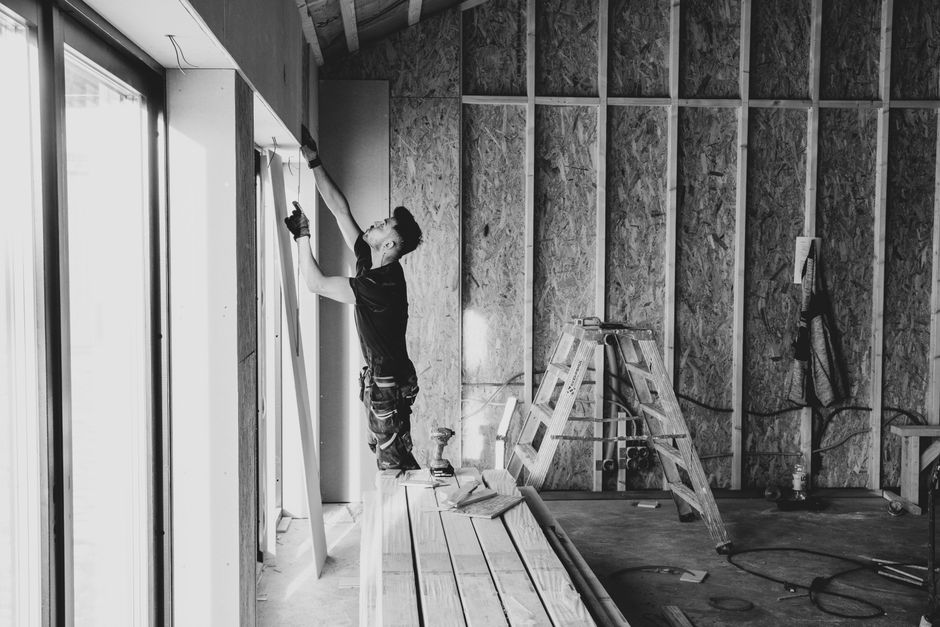
House wrap acts as the moisture barrier between your home’s framing and the siding, and gaps, tears, or improperly overlapped seams let water reach the wood sheathing underneath, leading to rot that stays hidden until siding is removed.
House wrap has one job: block liquid water while still letting water vapor escape from inside the wall. Seams need to overlap by several inches, running top over bottom, so water sheds down and off instead of seeping behind a seam.
Staples that tear the wrap create small entry points easy to miss during a final walkthrough. Skipping wrap around window and door openings causes the same problem, since that area needs extra care to tie into the flashing.
Once siding goes up, a gapped house wrap is invisible until something goes wrong.
Using the wrong caulk, applying too much, or sealing spots that need to stay open all trap moisture against the wall instead of letting it drain, which causes rot, mold, and premature siding failure.
Caulk is meant for specific joints, not as a fix for a sloppy installation. A thick bead over a gap that is too wide because of a measurement error cracks, peels, and lets water back in within a season or two.
Vinyl siding causes a particular problem when panels are caulked along their horizontal laps. Vinyl hangs loose on purpose so panels can slide as they expand, and sealing that lap locks the panel in place and causes buckling almost immediately.
The right approach uses a flexible, paintable exterior sealant only where manufacturers call for it, such as at trim corners, and leaves drainage gaps open.
An unlevel or poorly spaced starter strip throws off every row of siding installed above it, resulting in a wavy, unprofessional appearance and panels that do not lock together correctly.
The starter strip sets the baseline for an entire wall, so a small error at this stage multiplies as rows stack upward. A strip installed without a level and chalk line can drift by a fraction of an inch per row, and by the top of a two-story wall the line is visibly crooked.
A small gap, often around a quarter inch, also needs to be left between starter strip sections so the strip can expand without buckling.
The table below summarizes each mistake.
| Mistake | Consequence | Fix | |—|—|—| | Overdriven or off-center nails | Buckled panels, entry points for rain | Center fasteners in slots, space 12-16 inches apart | | Flashing installed backward or sealed shut | Water trapped in wall cavity | Layer flashing under siding, leave drainage gap open | | No expansion gap at panels or trim | Cracked, buckled, misaligned siding | Leave manufacturer-specified gaps, account for trim thickness | | Torn or under-lapped house wrap | Hidden rot in wall sheathing | Overlap seams correctly, patch every tear before siding goes up | | Caulked vinyl laps or oversized gaps | Trapped moisture, buckling, peeling caulk | Use sealant only where specified, fix gaps instead of caulking over them | | Unlevel or tight starter strip | Crooked rows, poor panel lock-up | Set with level and chalk line, leave spacing between sections |
Warning signs include panels that rattle or buckle, visible gaps at corners and trim, water stains on interior walls, and rows that look wavy instead of straight. James Hardie and most vinyl manufacturers publish installation specs a homeowner can compare against.
Yes. Most manufacturers, including James Hardie, require installation to follow their published guidelines exactly, and failure to do so can void material warranties even if the siding itself was not defective.
High humidity, frequent heavy rain, and hurricane-season wind put more stress on flashing, sealing, and fastening than drier climates do. A small gap or fastening error that might go unnoticed elsewhere can lead to water intrusion much faster here.
Repair costs depend on how much water damage has already occurred behind the siding, since rotted sheathing or framing adds significantly more labor than resetting panels. Big Easy Sidings offers free estimates so homeowners know the scope before committing to repairs.
Ask how they handle flashing at windows and doors, what fastener spacing they use, and whether they follow manufacturer installation guides like those from James Hardie. A contractor who answers these questions clearly is more likely to install the job correctly the first time.
Correct installation protects your home from water damage, keeps manufacturer warranties valid, and saves you from paying for the same repair twice.
Big Easy Sidings is licensed, insured, and backed by a best price guarantee on installation and repair work across the New Orleans area.
Call 504-608-7163 or visit the contact page to schedule a free estimate and get a clear answer on the condition of your current siding.
 Big Easy Sidings