

Call Our Experts!
Call Our Experts!

Summary
Siding color directly influences the mood and atmosphere of your home. Cool tones like blue and sage green promote relaxation, while warm colors like yellow or beige create energy and warmth. In New Orleans, light blues, neutrals, and muted earth tones fight tropical humidity and complement local architecture. Big Easy Sidings helps homeowners choose siding colors that match their home, neighborhood, and lifestyle.
Your home’s exterior is the first thing you see every morning and the last thing you see at night. Research from the University of Winnipeg shows people form judgments within 90 seconds, and 62 to 90 percent of that first impression comes from color alone. In New Orleans, where pastel shotgun houses, candy-bright Creole cottages, and historic Garden District facades define entire neighborhoods, siding color does more than mark a property line. It shapes how you feel about coming home.
At Big Easy Sidings, we install siding across New Orleans and southeast Louisiana, and color is one of the first things homeowners want to talk through. This guide covers the psychology behind siding colors, what different shades communicate, how New Orleans architecture informs color choice, and the practical factors to weigh.
For personalized advice, talk to a New Orleans siding contractor about your vision. Contact us today for a free estimate.
Color triggers emotional and physiological responses within seconds, before conscious thought. Environmental psychology research confirms that exterior color directly shapes how homeowners feel about their homes.
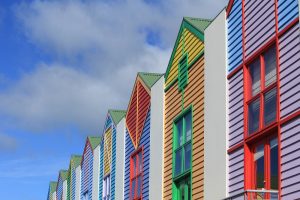 Exterior color creates stronger mood impact than interior because of daily exposure. Every home arrival and guest visit reinforces the color’s effect on your emotional state. A matching color lifts your mood; a clash becomes inescapable irritation.
Psychologist Robert Zajonc coined the “mere exposure effect” in 1968 to describe how repeated contact deepens emotional response. Siding color amplifies this effect because your home is one of the most frequently viewed objects in your life.
Color meaning shifts by culture. In New Orleans, pastel yellows, pinks, and sage greens carry deep association with Creole tradition. Navy blue reads coastal and classic. Crisp white connects to Greek Revival and Southern heritage.
Different color families produce different emotional effects. Understanding these patterns helps align your color choice with the feeling you want your home to convey.
Reds, oranges, and yellows raise heart rate slightly and stimulate positive engagement. Warm colors read as friendly and inviting. In New Orleans, warm siding colors echo the city’s festive cultural identity and pair beautifully with traditional architecture.
Blues, greens, and soft violets have calming, grounding effects. They lower heart rate slightly and promote peace. Sage green, dusty blue, and soft teal are popular in Uptown and Garden District homes where a serene aesthetic fits the setting.

Whites, creams, beiges, grays, and taupes project sophistication and balance. Neutrals work with almost any architectural style and rarely feel dated. Trim and accent colors can shift the overall mood without a full repaint.
Deep navy, charcoal, forest green, and black siding project confidence and drama. Dark tones feel solid, secure, and modern. They work well on contemporary architecture, though the tradeoff is heat absorption and faster UV fading in Louisiana’s climate.
New Orleans has a residential color tradition all its own. Matching siding color to architectural style preserves neighborhood character and protects resale value.
Creole cottages, shotgun houses, and French Quarter townhomes traditionally feature saturated pastels: butter yellow, blush pink, sea foam green, sky blue, and coral. These colors have become visual shorthand for New Orleans itself. Wood siding and James Hardie siding both hold these traditional colors well.
Garden District mansions and Uptown historic homes favor more subdued palettes: soft whites, pale grays, warm creams, sage greens, and classic shutter colors. These tones complement ornate trim on Greek Revival, Italianate, and Queen Anne architecture.
Newer construction in Mid-City, Lakeview, and suburbs like Kenner embraces contemporary palettes: charcoal, navy, warm white, and earth tones. Vinyl siding offers the widest color range for modern builds, including deeper saturated tones that hold up well against UV exposure.
Mood and aesthetics are only part of the picture. Climate, material, and regulation all shape which colors perform well on New Orleans homes.
Louisiana’s intense sun accelerates fading, especially for darker colors with low Light Reflectance Value (LRV) and saturated reds. Modern fade-resistant vinyl and fiber cement hold color longer than older materials, but dark siding still requires more maintenance. Ask about fade-resistant product lines and LRV ratings for longevity.
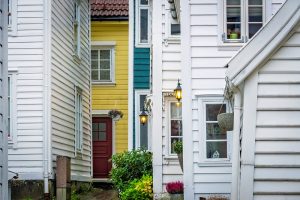 New Orleans has multiple historic districts with review requirements. The Vieux Carre Commission regulates all French Quarter exteriors including paint colors. The Historic District Landmarks Commission can review siding installations in other protected neighborhoods. Metairie, Mandeville, and Covington also have HOA communities with color rules.
Not every material supports every color. Factory-finished vinyl comes in set color catalogs. Fiber cement can be pre-finished or painted on site. Wood siding gives the widest color range but requires repainting every 5 to 7 years in Gulf Coast humidity.
The best siding color combines the mood you want at home, the architectural style of your house, the character of your neighborhood, and the practical realities of Louisiana weather. Drive through New Orleans neighborhoods that match your taste, gather sample swatches, and view them on your home at different times of day. Lighting changes how a color reads, and morning, afternoon, and evening light can make the same color feel warm or cool.
At Big Easy Sidings, we help New Orleans homeowners work through color decisions as part of every siding installation. We bring samples, explain product performance, and help you match color to architecture and climate.
We serve New Orleans, Baton Rouge, Covington, Gretna, Hammond, Kenner, Metairie, Slidell, and nearby communities across southeast Louisiana.
Call us today at 504-608-7163 for a free estimate.
Yes. Environmental psychology research shows that daily exposure to exterior color shapes emotional response through the mere exposure effect. Colors that match your preferences create positive reinforcement every time you see your home, while mismatched colors create low-level irritation over time.
Traditional Creole pastels (yellow, pink, sage green, sky blue) remain popular in historic neighborhoods. White, soft gray, and warm cream dominate Garden District and Uptown homes. Charcoal, navy, and earth tones are rising in Mid-City and Lakeview modern builds.
Generally yes. Darker pigments absorb more UV energy and fade more noticeably. Modern fade-resistant vinyl and fiber cement have closed the gap considerably, but dark colors still require more care. Look for products with UV-stable pigments rated for Gulf Coast sun.
Darker colors absorb more heat and can increase cooling loads slightly in summer, particularly for homes with limited attic insulation. The energy impact is modest compared to insulation and roof color, but it adds up over a Louisiana summer.
Wood and fiber cement siding can be repainted. Vinyl siding is more complicated because traditional paint does not adhere well. Repainting vinyl often voids manufacturer warranties, so replacement is usually the better option for a color change.
Yes, in the French Quarter. The Vieux Carre Commission regulates all paint colors there. Homes in the city’s other historic districts may need Historic District Landmarks Commission review for exterior work, so check with HDLC before changing siding there.
Real estate research favors warm neutrals (light gray, beige, cream) and classic whites because they appeal to the widest buyer pool. Bold colors can help if they match the neighborhood aesthetic, and hurt if they feel out of character for the street.
Classic neutrals and traditional New Orleans pastels age well because they have decades of cultural continuity behind them. Trend-driven colors may look dated within 5 to 10 years. When in doubt, choose a color that has been popular for at least 20 years.
 Big Easy Sidings