

Call Our Experts!
Call Our Experts!

Summary
The top James Hardie siding trends for 2026 include earthy Gulf Coast color palettes, mixed-material facades, and upgraded fiber cement formulations designed to handle Louisiana heat, humidity, and hurricane-force winds. Metairie, LA homeowners looking to boost curb appeal and long-term protection can explore these options with Big Easy Sidings, which offers free estimates on all James Hardie siding installations.
Table of Contents
Metairie sits just west of New Orleans, sharing the same Gulf Coast climate that tests every exterior surface on a home. Between summer heat indexes that regularly exceed 100 degrees, year-round humidity above 70 percent, and hurricane seasons that bring wind-driven rain, siding in this part of Jefferson Parish has to perform under pressure. That is exactly why James Hardie fiber cement siding has become one of the most popular exterior choices across the metro area. At Big Easy Sidings, we install James Hardie products designed specifically for this climate, and 2026 brings several trends worth considering if you are planning a siding upgrade.
This guide walks through the colors, styles, and material advancements shaping James Hardie siding choices for Metairie homeowners this year.
James Hardie fiber cement siding resists cracking, warping, and rotting, which makes it one of the most reliable exterior materials for the Gulf Coast climate. Unlike vinyl that can buckle in extreme heat or wood that absorbs moisture and invites termites, fiber cement holds its shape and finish through Louisiana’s toughest conditions.
Metairie homes face a specific combination of challenges that many siding materials struggle with. Subterranean termites are a constant concern in Jefferson Parish, and traditional wood siding provides exactly the kind of cellulose-rich environment they target. James Hardie fiber cement contains no organic material that attracts insects, removing that vulnerability entirely.
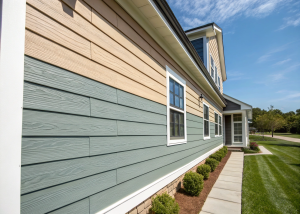
The product line is also engineered with regional climate zones in mind. James Hardie manufactures its HZ5 formulation specifically for areas with high humidity and frequent temperature swings, which describes Metairie and the greater New Orleans metro perfectly. This formulation includes moisture-management technology that prevents water from penetrating the board, reducing the risk of swelling and delamination that plagues cheaper fiber cement brands in coastal Louisiana.
Fire resistance is another standout feature. Fiber cement is noncombustible, which adds a layer of safety that vinyl and wood cannot match. For Metairie homeowners comparing materials, that combination of pest resistance, moisture management, and fire safety sets James Hardie apart from every other option on the market.
Warm, nature-inspired colors like Timber Bark, Mountain Sage, and sandy terracotta tones are dominating exterior color choices across Jefferson Parish in 2026, blending naturally with the live oaks and lush landscaping common in Metairie neighborhoods.
These earthy palettes work particularly well with the architectural character of Metairie’s residential areas. Ranch-style homes along Veterans Memorial Boulevard and the mid-century builds in Metairie Country Club look grounded and inviting in warm brown and sage tones. The colors also age gracefully in high-UV environments, which matters when direct sun exposure can fade lesser finishes within a few years.
James Hardie’s ColorPlus Technology applies color at the factory in multiple coats, baking it onto the fiber cement for a finish that resists fading, chipping, and peeling. That factory process delivers more consistent coverage than field-applied paint, which is a real advantage in the Gulf Coast climate where humidity can interfere with paint adhesion during on-site application.
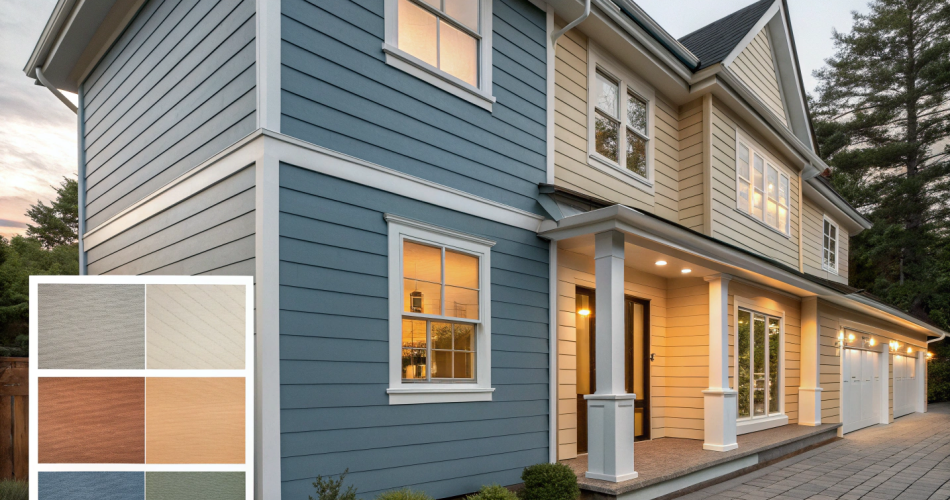
Deep blues like Evening Blue and rich greens are showing up on more homes across the New Orleans metro in 2026, and these bold choices hold up well when paired with James Hardie’s fade-resistant ColorPlus finish.
Bold colors make a strong statement on colonial-revival homes in Old Metairie and newer construction in Bucktown. Evening Blue paired with crisp white trim creates a classic coastal look, while Countrylane Red offers a warmer, more traditional presence. The key to making bold colors work on Gulf Coast homes is pairing them with neutral trim. Navajo Beige or Arctic White trim prevents the overall look from feeling overwhelming on larger facades.
One consideration specific to Metairie: homes with significant tree canopy may show dirt and pollen more visibly on lighter colors. Darker, bolder shades can be more forgiving between cleanings, which is practical for homeowners who want curb appeal without constant maintenance.
Arctic White, Pearl Gray, and warm greige tones remain the safest and most versatile choices for Metairie homeowners who want a modern, clean look without committing to a bold color.
Monochromatic styling is a growing trend in 2026, where the siding and trim use the same color family in slightly different shades. A Pearl Gray body with a lighter gray trim creates depth without contrast, and this approach works well on the contemporary builds going up in East Jefferson.
| Siding Color | Recommended Trim | Best Suited For |
|---|---|---|
| Evening Blue | Arctic White or Black | Colonial-revival, two-story homes |
| Mountain Sage | Navajo Beige | Ranch-style homes with mature landscaping |
| Timber Bark | Khaki Brown | Craftsman-style, wooded lots |
| Pearl Gray | Light Mist | Contemporary builds, monochromatic styling |
| Countrylane Red | Arctic White | Traditional, farmhouse-inspired facades |
Lap siding (also called horizontal clapboard) remains the most widely installed James Hardie profile in Metairie and across Jefferson Parish, and the HardiePlank lap siding line continues to dominate residential projects in 2026.
The horizontal lines of lap siding complement the long, low rooflines of ranch-style homes that are common throughout Metairie. This profile also works well on raised homes, where the horizontal boards draw the eye across the facade rather than emphasizing the height of the foundation. For homeowners replacing aging wood siding on older homes, HardiePlank lap offers a familiar look with dramatically better durability.
HardiePanel vertical siding with batten strips is one of the fastest-growing style choices in the New Orleans metro, especially on new construction and whole-house renovations where homeowners want a contemporary farmhouse aesthetic.
Board and batten creates strong vertical lines that make single-story homes appear taller. In Metairie, this profile is increasingly used as an accent on gable ends or entryways, paired with traditional lap siding on the rest of the facade. The mix of horizontal and vertical planes adds architectural interest without the cost of a full custom design.
Mixed-profile facades are a defining trend of 2026, combining lap siding, board and batten, and HardieShingle in different zones of the same home to create visual depth and architectural character.
A common approach in Metairie is to use lap siding on the main body, board and batten on gable ends, and HardieShingle panels as accents around dormers or porch areas. This layered look works particularly well on larger homes where a single profile can make the facade feel flat. All James Hardie profiles use the same fiber cement substrate, so mixing them does not create mismatched weathering or maintenance schedules.
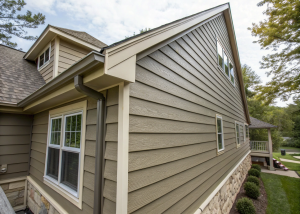
James Hardie’s HZ5 fiber cement formulation, designed for high-humidity and high-heat climates like Louisiana’s, continues to receive incremental improvements in moisture resistance and dimensional stability.
The HZ5 line uses proprietary moisture management technology that prevents water absorption at the board level. For Metairie homes that sit in a low-elevation flood zone and experience standing humidity for months at a time, this formulation prevents the swelling and warping that can compromise cheaper siding products. The boards maintain their dimensions through wet-dry and hot-cold cycles without the expansion gaps that plague some competing materials.
ColorPlus Technology applies multiple layers of factory-baked color to each board, producing a finish that resists UV fading, moisture blistering, and salt-air corrosion far longer than field-applied paint.
This matters in Metairie because the Gulf Coast sun delivers intense UV exposure year-round, and the humid air carries salt particles even miles inland from Lake Pontchartrain. Field-painted siding in this climate typically needs repainting every five to seven years. ColorPlus finishes carry a 15-year limited warranty against fading, chipping, and peeling, which translates to real cost savings over the life of the installation.
James Hardie has expanded its use of recycled raw materials and reduced carbon emissions in its manufacturing process, making fiber cement an increasingly sustainable choice for environmentally conscious homeowners.
Fiber cement is composed primarily of cement, sand, and cellulose fibers. Unlike vinyl siding, which is petroleum-based, these components are abundant and carry a lower environmental footprint. The product’s longevity also plays into its sustainability profile: a siding that lasts 30 to 50 years generates far less landfill waste than materials requiring replacement every 15 to 20 years.
Selecting the right combination of profile, color, and finish depends on your home’s architectural style, your neighborhood’s character, and how much direct weather exposure your exterior receives.
Start with the profile. If your Metairie home is a single-story ranch, traditional lap siding in a 7-inch or 8-inch exposure will maintain the home’s proportions. Two-story homes in neighborhoods like Metairie Club Gardens or along Metairie Road benefit from mixed profiles that break up larger facades.
Next, consider color in context. Drive your street and note what your neighbors have chosen. Standing out is fine, but choosing a color that clashes with the surrounding homes can affect resale value. The earthy and neutral palettes are safe bets in established Metairie neighborhoods, while bolder choices work well on newer builds where the streetscape is still developing.
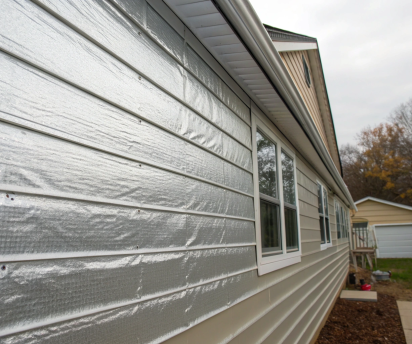
Finally, factor in your home’s orientation. South-facing and west-facing walls take the most UV punishment in Metairie. ColorPlus factory finishes are especially important on these exposures, where field-applied paint would degrade fastest. Pairing your siding upgrade with a radiant barrier installation can further reduce heat transfer through exterior walls, lowering cooling costs during Louisiana’s long summers.
Not every siding project needs to start with visible damage. Many Metairie homeowners reach out when they notice fading, chalking, or peeling paint on their current siding, which signals that the protective finish has broken down and the substrate is now exposed to moisture. Others call after hurricane season when wind-driven rain has worked its way behind aging siding and caused mold or rot in the sheathing beneath.
If your home still has its original builder-grade siding and it was installed more than 20 years ago, scheduling an inspection makes sense even if the exterior looks acceptable from the curb. Moisture damage behind siding is not always visible until it becomes a much more expensive repair.
You can reach Big Easy Sidings at 504-608-7163 to schedule a free estimate, or fill out the online form to get started.
Whether you are drawn to the earthy warmth of Mountain Sage, the coastal drama of Evening Blue, or the clean simplicity of Arctic White, James Hardie fiber cement siding gives Metairie homeowners a way to combine style with serious Gulf Coast durability. Big Easy Sidings handles the full installation process, from initial consultation through final inspection, so you get a finished exterior built to handle Louisiana weather for decades.
We serve New Orleans, Baton Rouge, Covington, Gretna, Hammond, Kenner, Metairie, Slidell, and throughout Louisiana.
Request your free estimate today and find out which James Hardie siding options are the best fit for your home.
James Hardie fiber cement siding typically lasts 30 to 50 years in the Gulf Coast climate when properly installed. The HZ5 formulation is specifically engineered for high-humidity regions like Metairie and resists moisture damage, termites, and UV fading.
Yes. While fiber cement costs more upfront than vinyl, it lasts significantly longer, requires less maintenance, and does not warp or buckle in Louisiana heat. Over a 30-year span, the total cost of ownership is often lower than vinyl, which may need replacement in 15 to 20 years.
ColorPlus Technology is James Hardie’s factory-applied, multi-coat finish that is baked onto each board. It resists UV fading, chipping, and peeling far longer than field-applied paint, which is important in Louisiana where intense sun and humidity degrade exterior paint quickly.
James Hardie fiber cement siding is tested to resist impacts and high winds. When installed according to manufacturer specifications with proper fastening, it performs well during Gulf Coast storms. It is also noncombustible and does not contribute to wind-driven fire spread.
The most popular colors for 2026 include earthy tones like Mountain Sage and Timber Bark, bold shades like Evening Blue and Countrylane Red, and classic neutrals like Arctic White and Pearl Gray. Gulf Coast homeowners are gravitating toward colors that complement natural landscaping.
 Big Easy Sidings